SEPTIC P3 Header HR-1
SEPTIC MOB P3 Header HR-1

Optimizing hemodynamic stability requires
engaging multiple vasoregulatory pathways1-3

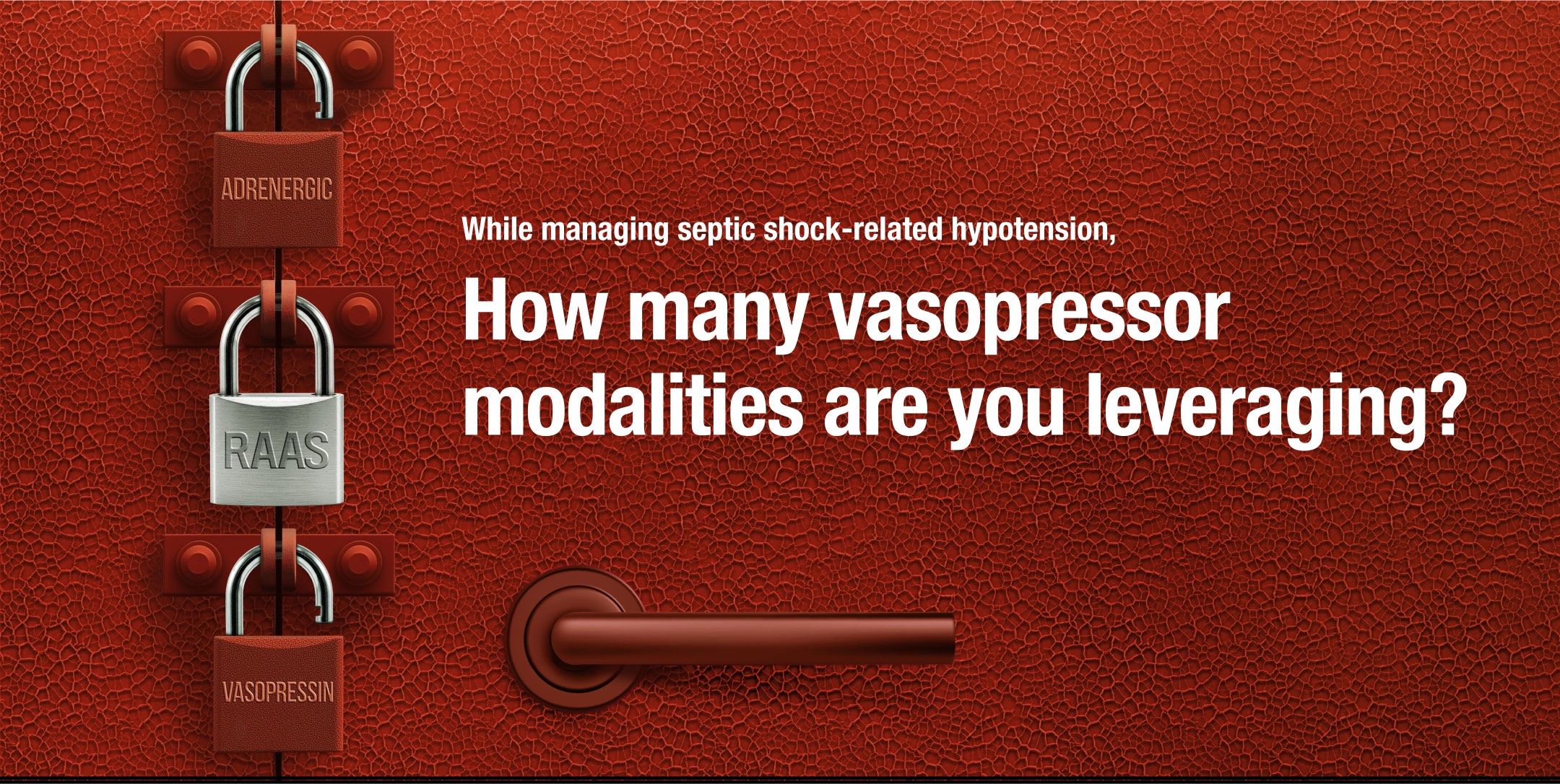
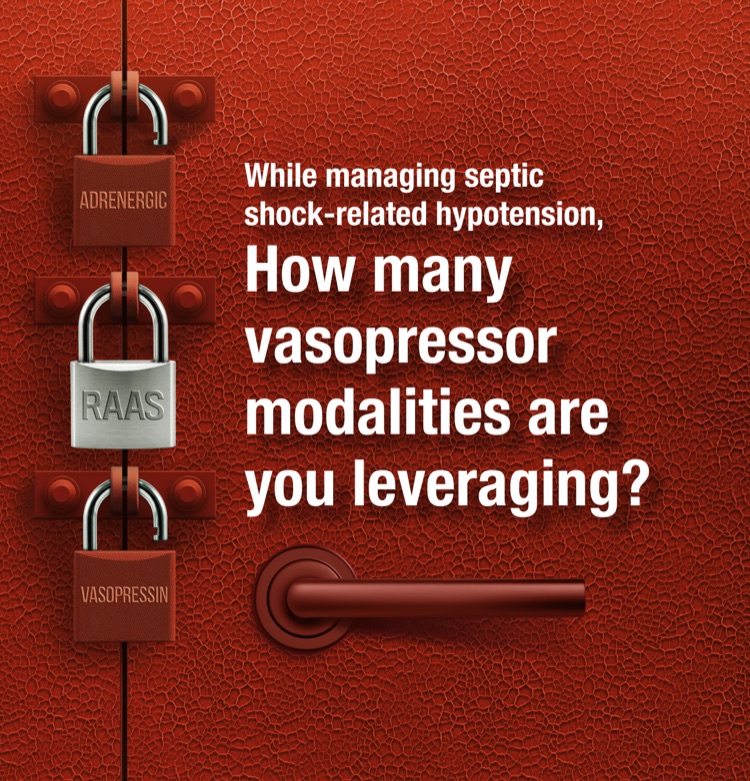
When adrenergic vasopressors fail to increase blood pressure, adding complementary modalities—vasopressin and RAAS—can address distinct mechanisms of vasodilation1-4

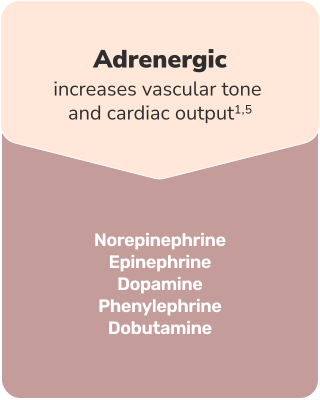
Adrenergic

increases vascular tone
and cardiac output1,5


Norepinephrine
Epinephrine
Dopamine

Phenylephrine

Dobutamine

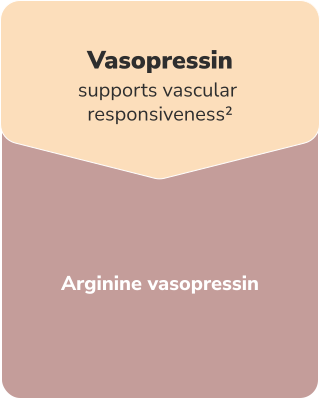
Vasopressin

supports vascular
responsiveness2


Arginine vasopressin


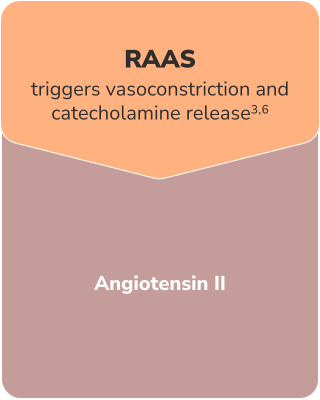
RAAS

triggers vasoconstriction
and catecholamine release3,6


Angiotensin II
 

Optimizing hemodynamic
stability requires engaging multiple vasoregulatory pathways1-3

When adrenergic vasopressors fail to increase blood pressure, adding complementary modalities—vasopressin and RAAS—can address distinct mechanisms of vasodilation1-4
Adrenergic-3
Vasopressing-3
RAAS-4

In a clinical study, treating with only adrenergic agents left patients at high mortality risk7,*

In a clinical study, treating with
only adrenergic agents left patients at high mortality risk7,*


risk of death at day 28 when treated
with dopamine only7


risk of death at day 28 when treated
with norepinephrine only7


risk of death at day 28 when treated with dopamine only7


risk of death at day 28 when treated with norepinephrine only7

No improvement in mortality risk at day 28 when only
vasopressin was added to norepinephrine8,†

No improvement in mortality risk at day 28 when only vasopressin was added to norepinephrine8,†

*

Based on a multicenter, randomized, blinded trial of 1679 patients with shock who required vasopressor treatment despite fluid therapy. Patients were assigned to receive either dopamine (n=858) or norepinephrine (n=821). The primary outcome was mortality rate at day 28.7


Based on a multicenter, randomized, double-blinded trial of 778 patients with shock who required vasopressor treatment despite fluid therapy and low-dose norepinephrine. Patients were assigned to receive either vasopressin (n=396) or norepinephrine (n=382). The primary outcome was mortality rate at day 28.8

RAAS=renin-angiotensin-aldosterone system.

*

Based on a multicenter, randomized, blinded trial of 1679 patients with shock who required vasopressor treatment despite fluid therapy. Patients were assigned to receive either dopamine (n=858) or norepinephrine (n=821). The primary outcome was mortality rate at day 28.7

Based on a multicenter, randomized, double-blinded trial of 778 patients with shock who required vasopressor treatment despite fluid therapy and low-dose norepinephrine. Patients were assigned to receive either vasopressin (n=396) or norepinephrine (n=382). The primary outcome was mortality rate at day 28.8


RAAS=renin-angiotensin-aldosterone system.


References: 1. Paravati S, et al. StatPearls; 2022. Accessed January 14, 2025. https://www.ncbi.nlm.nih.gov/books/NBK507716/ 2. Demiselle J, et al. Ann Intensive Care. 2020;10(1):9. 3. Fountain JH, et al. StatPearls; 2023. Accessed January 14, 2025. https://www.ncbi.nlm.nih.gov/books/NBK470410/ 4. Bellomo R, et al. Am J Respir Crit Care Med. 2020;202(9):1253-1261. 5. VanValkinburgh D, et al. StatPearls. 2025. Accessed January 16, 2025. https://www.ncbi.nlm.nih.gov/books/NBK482411/ 6. Tibi S, et al. J Clin Med. 2023;12(14):4566. 7. De Backer D, et al. N Engl J Med. 2010;362(9):779-789. 8. Russell JA, et al. N Engl J Med. 2008;358(9):877-887.

*

Based on a multicenter, randomized, blinded trial of 1679 patients with shock who required vasopressor treatment despite fluid therapy. Patients were assigned to receive either dopamine (n=858) or norepinephrine (n=821). The primary outcome was mortality rate at day 28.7

Based on a multicenter, randomized, double-blinded trial of 778 patients with shock who required vasopressor treatment despite fluid therapy and low-dose norepinephrine. Patients were assigned to receive either vasopressin (n=396) or norepinephrine (n=382). The primary outcome was mortality rate at day 28.8


RAAS=renin-angiotensin-aldosterone system.


References: 1. Paravati S, et al. StatPearls; 2022. Accessed January 14, 2025. https://www.ncbi.nlm.nih.gov/books/NBK507716/ 2. Demiselle J, et al. Ann Intensive Care. 2020;10(1):9. 3. Fountain JH, et al. StatPearls; 2023. Accessed January 14, 2025. https://www.ncbi.nlm.nih.gov/books/NBK470410/ 4. Bellomo R, et al. Am J Respir Crit Care Med. 2020;202(9):1253-1261. 5. VanValkinburgh D, et al. StatPearls. 2025. Accessed January 16, 2025. https://www.ncbi.nlm.nih.gov/books/NBK482411/ 6. Tibi S, et al. J Clin Med. 2023;12(14):4566. 7. De Backer D, et al. N Engl J Med. 2010;362(9):779-789. 8. Russell JA, et al. N Engl J Med. 2008;358(9):877-887.