
SEPTIC P1 Header HR
SEPTIC MOB P1 Header HR

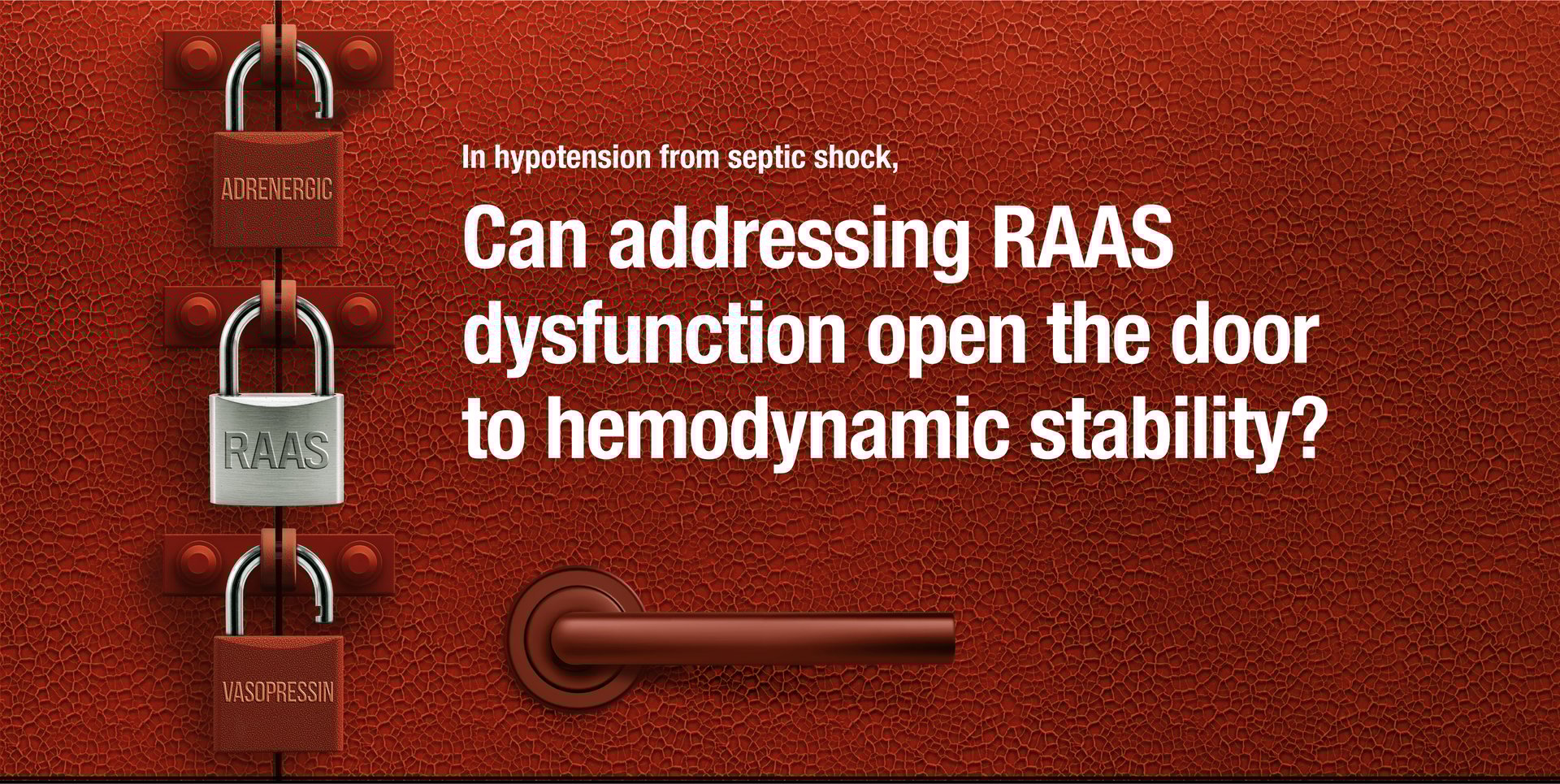
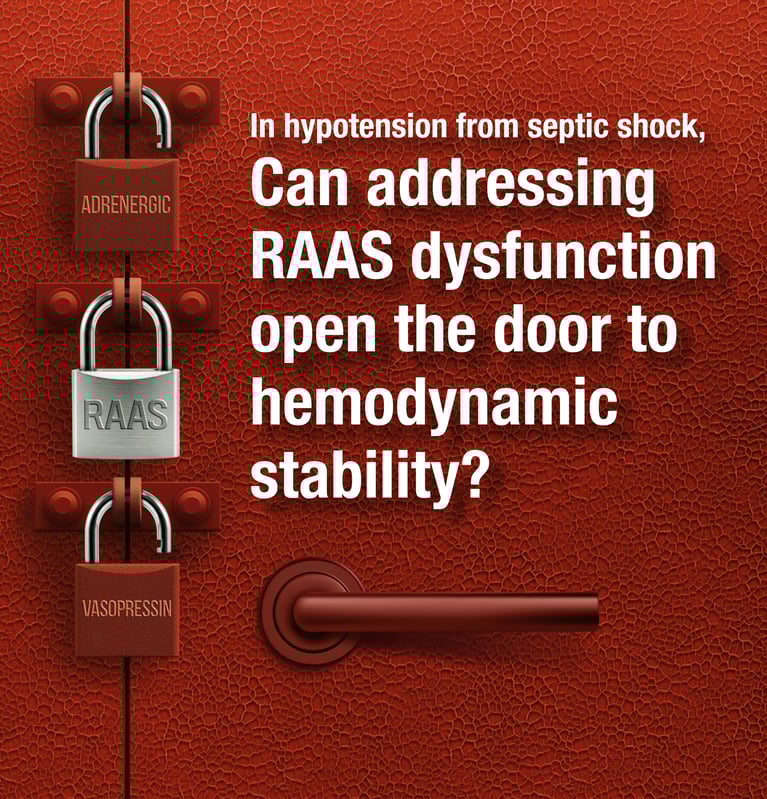
Hypotension from septic shock—a critical condition that can persist when RAAS becomes dysregulated and fails to restore hemodynamic stability1,2

Septic shock defined: a dangerous cascade3-6

Left Light_Circle-1

Profound vasodilation

Endothelial injury reduces the expression and activity of ACE, leading to impaired ANG II formation and excess production of vasodilatory angiotensin metabolites3-5

Middle Grey 02-3

Impaired perfusion

Despite high cardiac output, hypotension leads to inadequate tissue perfusion, reduced oxygen extraction, and tissue hypoxia3,5,6
Right Dark Organs-1

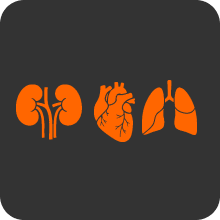
Multi-organ damage

Sustained hypotension drives
damage across vital end organs, including the kidneys, heart, and lungs, that can ultimately lead to organ failure5,6

Hypotension from septic shock—a critical condition that can persist when RAAS becomes dysregulated and fails to restore hemodynamic stability1,2

Septic shock defined:
a dangerous cascade3-6

Left Light_Circle-1

Profound vasodilation

Endothelial injury reduces the expression and
activity of ACE, leading to impaired ANG II
formation and excess production of
vasodilatory angiotensin metabolites3-5

Middle Grey 02-3

Impaired perfusion

Despite high cardiac output, hypotension leads to inadequate tissue perfusion, reduced oxygen extraction, and tissue hypoxia3,5,6

Right Dark Organs-1

Multi-organ damage

Sustained hypotension drives damage
across vital end organs, including the
kidneys, heart, and lungs, that can
ultimately lead to organ failure
5,6

Early aggressive treatment of septic shock-related hypotension is vital7

Early aggressive treatment of septic shock-related hypotension is vital7

RAAS pathway dysfunction drives hypotension, a hallmark of septic shock pathophysiology2,8

RAAS pathway dysfunction drives hypotension, a hallmark of septic shock pathophysiology2,8

Under normal conditions, the RAAS
pathway increases blood pressure in
response to hypotension

 
The kidneys release renin into the bloodstream in response to low blood pressure2

Renin cleaves angiotensinogen, produced in the liver, to ANG I2

ACE, expressed by pulmonary and renal endothelial cells, converts ANG I into ANG II2,8


ANG II maintains hemodynamic stability by
• Inducing vasoconstriction2
• Triggering norepinephrine and vasopressin release2,8


How RAAS pathway dysfunction
perpetuates hypotension

 
The kidneys release renin into the bloodstream in response to low blood pressure2

Renin cleaves angiotensinogen, produced in the liver, to ANG I2

In septic shock, endothelial injury in the kidneys and lungs reduces the expression and activity of ACE, thereby limiting conversion of ANG I into ANG II and leading to excess production of vasodilatory angiotensin metabolites1,2
ANG II depletion contributes to hypotension by
• Preventing vasoconstriction2
• Stimulating renin release and leading to excess
production of vasodilatory angiotensin metabolites9

Under normal conditions,
the RAAS pathway increases blood
pressure in response to hypotension


The kidneys release renin into the bloodstream in response to low blood pressure2
Renin cleaves angiotensinogen, produced in the liver, to ANG I2
ACE, expressed by pulmonary and renal endothelial cells, converts ANG I
into ANG II2,8
ANG II maintains hemodynamic stability by
• Inducing vasoconstriction2
• Triggering norepinephrine and vasopressin release2,8

How RAAS pathway dysfunction
perpetuates hypotension


The kidneys release renin into the bloodstream in response to low blood pressure2

Renin cleaves angiotensinogen, produced in the liver, to ANG I2

In septic shock, endothelial injury in the kidneys and lungs reduces the expression and activity of ACE, thereby limiting conversion of ANG I into ANG II and leading to excess production of vasodilatory angiotensin metabolites1,2
ANG II depletion contributes to hypotension by
• Preventing vasoconstriction2
• Stimulating renin release and leading to excess production of vasodilatory angiotensin metabolites9

RAAS dysfunction limits ANG II production—impairing blood pressure restoration in septic shock2

RAAS dysfunction limits ANG II production—impairing blood pressure restoration in septic shock2

ACE=angiotensin-converting enzyme; ANG=angiotensin; RAAS=renin-angiotensin-aldosterone system.

References: 1. Bellomo R, et al. Am J Respir Crit Care Med. 2020;202(9):1253-1261. 2. Fountain JH, et al. StatPearls; 2023. Accessed January 14, 2025. https://www.ncbi.nlm.nih.gov/books/NBK470410/ 3. Boisramé-Helms J, et al. Curr Vasc Pharmacol. 2013;11(2):150-160. 4. Miranda M, et al. Am J Physiol Heart Circ Physiol. 2016;311(1):H24-H35. 5. Parrillo JE, et al. Ann Intern Med. 1990;113(3):227-242. 6. Annane D, et al. Lancet. 2005;365(9453):63-78. 7. Vincent J-L, et al. Ann Intensive Care. 2018;8(1):107. 8. Tibi S, et al. J Clin Med. 2023;12(14):4566. 9. Bitker L, Burrell LM. Crit Care Clin. 2019;35(2):213-217.

ACE=angiotensin-converting enzyme; ANG=angiotensin; RAAS=renin-angiotensin-aldosterone system.

References: 1. Bellomo R, et al. Am J Respir Crit Care Med. 2020;202(9):1253-1261. 2. Fountain JH, et al. StatPearls; 2023. Accessed January 14, 2025. https://www.ncbi.nlm.nih.gov/books/NBK470410/ 3. Boisramé-Helms J, et al. Curr Vasc Pharmacol. 2013;11(2):150-160. 4. Miranda M, et al. Am J Physiol Heart Circ Physiol. 2016;311(1):H24-H35. 5. Parrillo JE, et al. Ann Intern Med. 1990;113(3):227-242. 6. Annane D, et al. Lancet. 2005;365(9453):63-78. 7. Vincent J-L, et al. Ann Intensive Care. 2018;8(1):107. 8. Tibi S, et al. J Clin Med. 2023;12(14):4566. 9. Bitker L, Burrell LM. Crit Care Clin. 2019;35(2):213-217.